
What Type of Sod Should You Get? The Complete Guide to Choosing Grass in the Northeast
We install sod for a living. Residential lawns, athletic fields, golf courses and commercial sites across NY, NJ, CT and PA, and we have been doing it since 1997. We don't grow the grass ourselves. We buy it fresh from farms in our region, including growers in the famous black dirt country around Pine Island, NY, and we install it the same day it's cut. That independence matters. A grower can only recommend what's standing in their own fields, but we buy from many farms, so we have no crop to favor and no bias about what's best. Our only stake is the match. So when people ask us what type of sod they should get, the honest answer is that it depends on the site. The better news is that in the Northeast there are really only four grasses you need to understand, plus the blends that combine them.
The short version: if your lawn gets six hours of sun or more and you can water it, Kentucky Bluegrass is the showpiece. If you want tough and low fuss, or your site runs hot and dry, turf type Tall Fescue. If your yard is a bit of everything, a bluegrass and fescue mix. Deep shade, fine fescue. Athletic fields and golf courses play by their own rules, and we cover those below too.
That's the answer you'd get from us on the phone. The rest of this guide is the answer you'd get if we had an hour and a truck tailgate to sit on.
Why Your Region Chooses First: Cool Season Grasses in the Northeast
Every lawn grass on earth falls into one of two camps. Warm season grasses, the Bermudas and zoysias that carpet the South, do their growing in real heat and go straw brown the moment temperatures drop. Cool season grasses do the opposite. They grow best when air temperatures sit in the 60s and 70s, which is why lawns around here surge in spring and fall and sulk a little in August.
The Hudson Valley and the broader tri state region sit firmly in cool season territory. A zoysia lawn in Orange County would spend roughly seven months of the year dormant and brown, from the first cold nights of October until well into May, which is why you will not find it on any sod farm we buy from, no matter what the mail order plug ads promise. Every acre of sod grown in our region is cool season grass, and it comes down to four species: Kentucky bluegrass, tall fescue, fine fescue and perennial ryegrass. Learn what each one wants, and choosing gets easy.
Kentucky Bluegrass Sod: The Classic Northeast Lawn

This is the grass most people picture when they picture a perfect lawn. Deep green verging on blue green, dense enough to hide the soil completely, and soft underfoot. It goes down on most of our residential installs, and for good reason.
The trait that sets bluegrass apart is how it grows. It spreads by underground stems called rhizomes, which means the lawn repairs itself. A thin patch, a dog spot, a scar where the kiddie pool sat all July: bluegrass creeps back in and closes the gap on its own, which no other cool season grass truly does. It is also the most cold hardy lawn grass we install, which matters when a Hudson Valley winter decides to show off.
The farms we buy from typically grow bluegrass sod as a blend of four or so proven varieties rather than a single one, and that's deliberate. Different varieties carry different disease resistance, so a blend stays uniform in color while shrugging off problems that could thin out a single variety field.
What bluegrass asks of you is sun and water. It wants six hours of direct light or more, and about an inch of water a week through summer heat, from you or from the sky. Skip the water during a hot stretch and bluegrass doesn't die, it goes dormant, browning out to protect its crowns and greening back up when rain returns. Some homeowners accept that trade every August. Others irrigate straight through. Either works, as long as you know it's coming. Plan on mowing at 2.5 to 3.5 inches and feeding it a few times a year. This is a grass with an appetite, and it pays you back in color.
One more point in its favor: bluegrass is painfully slow from seed. It can take 14 to 30 days just to germinate and a full season to knit into anything you'd call a lawn. Sod skips all of that, which is why bluegrass, more than any other grass, is worth buying as sod. You're paying the farm for the two years of patience you'd otherwise have to supply yourself.
Turf Type Tall Fescue Sod: The Workhorse

First, let's clear up the name. Tall fescue earned a coarse reputation decades ago from Kentucky 31, a pasture grass that wandered into lawns. Modern turf type tall fescue is a different animal, bred since the 1980s to be finer bladed, darker and denser, and today's varieties can pass for bluegrass at a glance.
What hasn't changed is the root system. Turf type tall fescue puts roots down two to three feet, far deeper than bluegrass, so it finds its own water long after shallower grasses have given up. That's why it shrugs off the heat and dry spells that send a bluegrass lawn into dormancy, and why it's our first recommendation for sites without irrigation. It also tolerates more shade than bluegrass, getting by on four to six hours of sun, and it stands up well to heavy foot traffic.
Its one structural weakness is that it grows in bunches rather than spreading, so it can't heal a bare patch by itself. The sod farms solve most of that by growing it with a small amount of Kentucky bluegrass, around ten percent, so the sod knits together and keeps a modest ability to repair. Beyond that, tall fescue is agreeably undemanding: mow it at three to four inches, feed it less than you'd feed bluegrass, and it stays green with a fraction of the fuss. In a muggy Northeast summer it can show some brown patch fungus, but healthy, well drained fescue usually grows right through it.
If you want a lawn that looks great on less water and less babying, or your yard bakes on a south facing slope, this is the one we point you to.
Kentucky Bluegrass vs Tall Fescue: The Honest Comparison
These two account for the vast majority of what we install, so here is how they stack up, trait by trait.
Appearance. Bluegrass wins on pure looks: deeper color, finer texture, that seamless carpet effect. Modern tall fescue comes close, and most neighbors couldn't tell you which is which, but side by side the bluegrass reads richer.
Drought and heat. Tall fescue, decisively. Its deep roots keep it green through stretches that send bluegrass into brown dormancy.
Self repair. Bluegrass, decisively. Rhizomes fill in damage on their own, while fescue needs overseeding to close a gap.
Shade. Tall fescue handles part shade better. Neither is a true shade grass, though. That's fine fescue's job.
Traffic. Call it a split. Fescue resists wear a little better in the moment, and bluegrass recovers from it far better afterward.
Inputs. Tall fescue wants less water and less fertilizer. Bluegrass rewards higher inputs with a higher ceiling.
Winter. Bluegrass is the most cold hardy grass on this list and the safer bet after a brutal winter or for a lawn installed late in the season.
If you have irrigation and want the showpiece, bluegrass. If you'd rather the lawn take care of itself, fescue. And if you're torn, keep reading, because the mix exists for exactly this reason.
Bluegrass and Fescue Mixes: The Family Yard Answer
Plenty of yards aren't one thing. Sun in front, shade along the fence line, kids and a dog wearing base paths into the back. A bluegrass and fescue mix gives you the color and self repair of bluegrass with the toughness, shade tolerance and drought resistance of fescue, and the two grasses sort themselves out over time, each claiming the ground where it's happiest. Five years in, the sunny stretches lean bluegrass, the tree line leans fescue, and the whole thing reads as one lawn. For a large share of the family lawns we install, this is the sweet spot.
Fine Fescue Sod: The Shade and Low Maintenance Specialist
Fine fescue is actually a family of closely related grasses, creeping red fescue, chewings fescue, hard fescue and sheep fescue among them, and they share the same virtues: needle fine blades, a soft, almost feathery look, and remarkable tolerance for shade. Where bluegrass demands six hours of sun, fine fescues get by on three or four.
They are also the lowest maintenance turf you can grow in the Northeast. Less fertilizer, less mowing, genuine drought tolerance. Left alone, they'll even relax into the soft meadow look you see in no mow plantings and golf course roughs.
The honest limits: fine fescue dislikes heavy foot traffic and can struggle through hot, wet summers, so it's rarely the whole lawn. You'll usually meet it as the backbone of a shade mix, holding ground under mature trees where nothing else will. And if a spot gets less than about three hours of light a day, we'll tell you straight: no turfgrass thrives there, and a bed of groundcover or mulch will make you happier than replacing sod every two years.
Perennial Ryegrass: The Fast Starter
Perennial ryegrass is the sprinter of the group. It germinates in about a week, faster than anything else here, establishes quickly and wears well underfoot, which is why it shows up in seed mixes and in the overseeding programs that keep athletic fields alive through a season. It's rarely the headline grass in Northeast sod, partly because it grows in bunches and can't repair itself, and partly because it's the least winter hardy of the four, vulnerable to ice damage in a bad year. Think of it as a valuable supporting actor: quick cover and honest wear tolerance, best used alongside grasses with more staying power.
Sod for Athletic Fields: Bred for Abuse

Sports fields live a different life. They get torn up on a Friday night and need to be playable the following week, all season long, so this is where the specialty bluegrasses earn their keep.
We've installed HGT Kentucky Bluegrass, a variety group bred specifically for wear. In university trials, including at Rutgers here in our region, HGT varieties ranked at the top for traffic tolerance and for how quickly they recover after being torn up. There are also low mow bluegrasses that stay dense at the short heights coaches and players want, and for fields that need to return to play fast, thick cut and big roll sod arrives with enough soil attached to take cleats far sooner than standard cut sod.
If you manage a field, the right answer depends on your sport, your schedule and your budget, and it's a conversation we're happy to have. We've handled everything from municipal fields to a 250,000 square foot stadium installation.
Sod for Golf Courses: A Different Game Entirely

Golf turf is its own world. Greens, tees and fairways are usually bentgrass, a grass that tolerates mowing heights most lawns couldn't survive, down to roughly a tenth of an inch on a putting green, and delivers a surface texture nothing else can. Roughs and bunker surrounds often run to fine fescue. These are specialty installs using sod grown to order by farms that do nothing else, with tight windows between cutting and laying, and we've put down both.
How to Choose Your Sod: Four Questions to Answer
When we walk a property, we're really answering four questions, and you can answer most of them yourself before we ever show up.
How much sun, actually? Stand in the yard on a summer day and count the hours of direct light. Six or more opens every door, including bluegrass. Four to six points toward tall fescue or a mix. Three to four is fine fescue territory. Under three, we'll talk about options other than grass, because we'd rather lose the sale than sell you sod that can't win.
Is there water? Irrigation, or a real willingness to drag hoses, makes bluegrass a genuine option and makes summer installation easy. No irrigation and no interest in watering beyond establishment points strongly to tall fescue.
Who uses the lawn? A showpiece front yard, a dog run and a backyard wiffle ball stadium are three different assignments. Traffic plus the need for self repair favors bluegrass or a mix. Pure wear resistance favors fescue.
How much do you want to maintain? Bluegrass rewards feeding and watering with the best color on the street. Fescue looks ninety percent as good on half the effort. Fine fescue barely wants to meet you.
And if you're still not sure, that's fine. Our estimate form literally has a button that says help me decide. Tell us about the site and we'll match it to what the farms are cutting right now, because sod is a live crop and availability shifts through the season.
Site Prep: The Part of the Job You Never See
Here is something we tell every customer: the variety you pick matters less than the prep underneath it and the freshness of the sod on top of it. A mediocre grass on excellent prep will outperform a premium grass thrown onto hardpan every single time.
Good prep means killing off the old turf and weeds, grading so water moves away from the house, and loosening the compacted layer so roots can actually punch through. It means a soil test, because Northeast soils often run acidic and every grass on this list wants a pH between roughly 6.0 and 7.0, and lime is cheap insurance. It also means starter fertilizer worked into the soil. New York restricts phosphorus on established lawns, but establishing a new lawn is the exception written into the law, and it's precisely the moment phosphorus earns its keep, driving root growth while the sod knits down.
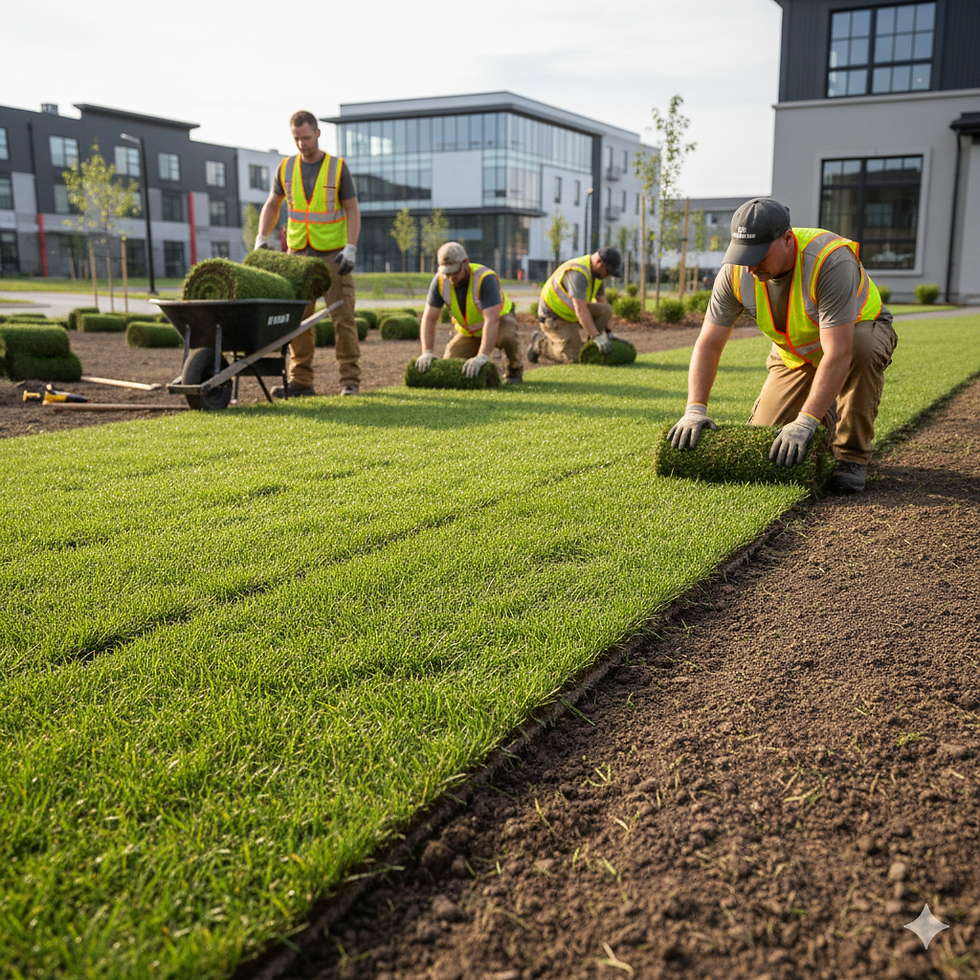
Then there's freshness. Sod is a perishable crop. Stacked on a pallet, it starts generating heat within hours, and sod that sits too long cooks from the inside. This is why we only install sod cut that same day. It costs us convenience, and it's half the reason our lawns take.
Caring for New Sod: The First Three Weeks
Water is the whole game at the start. New sod should be soaked within an hour of going down, deeply enough that the soil beneath it is wet, then kept consistently moist with daily watering through the first week or two, longer in summer heat. From there you taper: deeper, less frequent watering that teaches the roots to chase moisture downward.
Around two to three weeks in, do the tug test. Grab a corner and pull gently. If it resists, the roots have knitted and the sod is yours. That's also when it gets its first mow, on a high setting, following the rule that applies to every lawn forever: never remove more than a third of the blade at once. Keep foot traffic light until the tug test passes, and by week four you have a lawn, not a project.
When to Install Sod in the Northeast
Early fall is the golden window. The soil is still warm, the air has cooled, weed pressure has collapsed, and sod laid in September roots hard before winter and explodes in spring. Spring is a strong second. Summer works too, provided you commit to the watering, and it's when much of our schedule fills. The larger point is one of sod's quiet advantages over seed: the install window runs nearly the whole growing season, essentially any time the ground isn't frozen, while a seeding project lives or dies by hitting a few narrow weeks.
Frequently Asked Questions
What is the best sod for the Northeast?
For sunny, irrigated lawns where appearance leads, Kentucky Bluegrass. For toughness on less water and less work, turf type Tall Fescue. For yards with a bit of everything, a bluegrass and fescue mix. There is no single best, only the best fit for the site, which is what this guide is for.
Is sod better than seed?
They end in the same place, but the paths differ. Seed costs less up front, takes a season or more to become a real lawn, fights weeds the whole way, and only succeeds inside narrow planting windows. Sod is a finished, farm grown lawn on day one. It controls erosion immediately, arrives essentially weed free, and can go down almost any time in the growing season. For slopes, for bluegrass, and for anyone who wants a lawn this year, sod wins.
Can you lay sod in the shade?
In part shade, yes. Fescue blends handle three to four hours of sun. Below about two hours of direct light, no turfgrass will hold long term, and we'll recommend groundcover or mulch instead of taking your money.
What is the best sod for dogs?
A bluegrass and fescue mix is our usual answer. The fescue supplies wear resistance for the daily patrol routes, and the bluegrass supplies the self repair that fills in urine spots and dig marks. No grass is truly dog proof, but that combination recovers best.
How long before you can walk on new sod?
Keep traffic light for the first two to three weeks, until a gentle tug on a corner meets resistance, which means the roots have knitted into the soil. Normal family use is fine by about week four.
Does new sod need to be watered every day?
For the first week or two, yes, enough to keep the soil beneath it consistently moist, and more often in summer heat. After that you taper to deeper, less frequent watering that drives roots down. Established sod then needs whatever its grass type needs, which for tall fescue and fine fescue is often nothing beyond rainfall.
Ready to Start?
Tell us about your project and we'll get you an estimate within one business day. If you already know your grass, say so. If you don't, hit help me decide and describe the site, and we'll match it to what our farms are cutting that week. Either way, it goes down fresh: cut that morning, installed that day.
Northeast Sod Inc. has installed lawns, athletic fields and golf course turf across New York, New Jersey, Connecticut and Pennsylvania since 1997.


Comments