
What Does a Professional Sod Installer Actually Do? Understanding the Difference
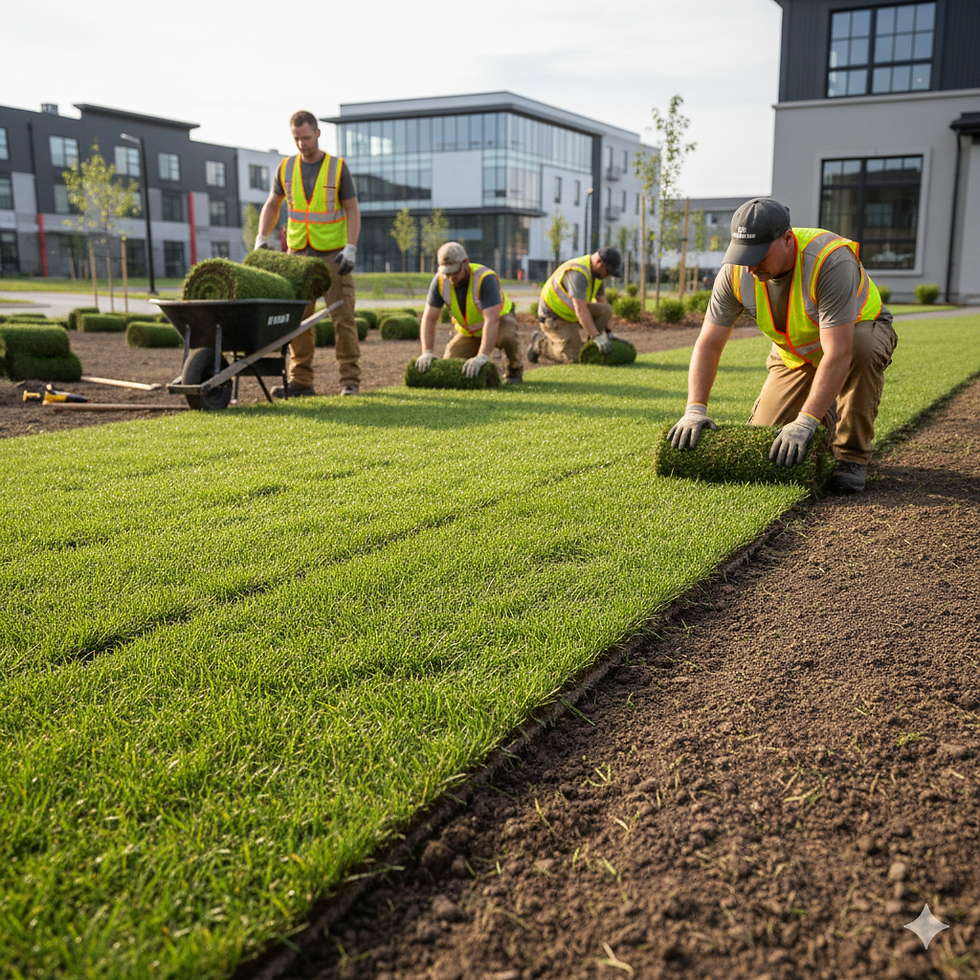
The Question Every Project Manager Should Ask
"Do I need a landscaper, a general contractor, or a sod installer?"
It's a fair question. On the surface, sod installation might seem straightforward—cut grass, roll it out, water it, done. If that were true, any contractor with a truck could deliver equivalent results.
Reality tells a different story. Professional sod installation is a specialized trade requiring specific knowledge, timing coordination, supply chain relationships, and execution techniques that landscapers, general contractors, and property owners may not possess—and often don't need to possess.
Understanding where sod installation fits within the broader construction and landscape ecosystem helps ensure your project gets executed correctly, on schedule, and within budget. More importantly, it prevents the costly mistakes that occur when the wrong professional attempts work outside their specialty.
The Professional Landscape: Who Does What
Before diving into what makes sod installation distinct, it helps to understand the broader professional ecosystem in which these projects unfold.
Landscape Contractors: The Comprehensive Specialists
Landscape contractors design, install, and maintain outdoor spaces. Their scope typically encompasses:
Landscape design and master planning
Site preparation including grading and drainage
Planting of trees, shrubs, perennials, and ornamentals
Hardscaping such as patios, walkways, retaining walls
Irrigation system design and installation
Lighting for landscape features
Ongoing maintenance including mowing, trimming, fertilization
A landscape contractor manages the overall vision and execution of outdoor spaces. They coordinate multiple elements—plants, hardscapes, irrigation, lighting—into cohesive designs that meet client objectives while addressing site constraints.
Where sod installation fits: Landscape contractors either install sod themselves (if they have appropriate crews and experience) or bring in specialized sod installers to execute that specific phase while maintaining overall project management and client relationships.
General Contractors: The Construction Coordinators
General contractors manage building projects from foundation to completion. On projects involving exterior work, their responsibilities include:
Overall project management and timeline coordination
Subcontractor management for specialized trades
Site grading and drainage engineering
Utility coordination (water, sewer, electric, gas)
Final grading and site preparation for landscaping
Certificate of occupancy requirements
General contractors focus on the built environment—structures, infrastructure, utilities. Landscaping and sod installation represent final-phase work that occurs once construction is substantially complete.
Where sod installation fits: General contractors schedule sod installation as one of the last trades to access the site, after heavy equipment has departed and final grading is complete. They coordinate timing with the sod installer but don't typically perform the installation themselves.
Golf Course Superintendents: The Turf Managers
Golf course superintendents oversee the maintenance, agronomic health, and playability of golf courses. Their expertise includes:
Turf management across greens, tees, fairways, and roughs
Pest and disease control programs
Irrigation system operation and maintenance
Equipment management and crew supervision
Agronomic planning for course conditions
Superintendents possess deep turf knowledge and manage sophisticated maintenance programs. However, major installations—new course construction, large-scale renovations, complete fairway replacement—often require specialized installation crews and equipment superintendents don't maintain in-house.
Where sod installation fits: Superintendents coordinate with specialized installers for large-scale projects, providing specifications and agronomic requirements while the installer brings installation-specific crews, equipment, and logistics capabilities.
Homeowners: The End Users
Homeowners initiate residential projects but typically lack the equipment, experience, and time for professional-grade sod installation. DIY sod installation is possible for small areas (under 1,000 square feet), but larger lawns benefit significantly from professional execution.
Where sod installation fits: Homeowners either work directly with sod installers for straightforward lawn replacements or coordinate through their landscape contractor who brings in the sod installer as a specialized subcontractor.
What Makes Sod Installation a Distinct Specialty
Given that landscape contractors can plant, general contractors can manage sites, and superintendents understand turf, what makes sod installation specialized enough to warrant dedicated professionals?
1. Time-Critical Supply Chain Management
Sod is a living, perishable product with a narrow viability window. Once harvested from the farm, sod must be installed within 24-36 hours to maintain health and rooting capability. Beyond that window, the grass begins deteriorating—yellowing, heating, dying.
Professional sod installers maintain direct relationships with regional sod farms, coordinating:
Harvest scheduling aligned with installation dates
Species selection matching project specifications and site conditions
Quality control ensuring sod meets thickness, maturity, and health standards
Delivery logistics timing arrival to coincide with crew readiness
Backup sourcing when weather or complications disrupt schedules
This isn't ordering materials that sit in a warehouse. It's coordinating living agricultural products with installation execution—requiring farm relationships, agronomic knowledge, and logistics expertise.
A landscape contractor designing a complete property makeover coordinates multiple elements over weeks or months. A sod installer coordinates perishable product delivery and installation within a 24-48 hour window. Different specialties, different skill sets.
2. Installation Technique and Precision
"Rolling out grass" oversimplifies what proper sod installation requires. Professional installation involves:
Site Inspection and Preparation Verification
Confirming soil grade, drainage patterns, and soil quality
Identifying irrigation readiness and access points
Assessing site access for equipment and materials
Verifying that preparation work (completed by others) meets installation requirements
Strategic Layout Planning
Determining optimal starting points and installation sequence
Planning seam alignment to avoid visible lines
Identifying cutting requirements for borders, curves, and obstacles
Coordinating multiple crew members for efficient coverage
Precision Installation Execution
Laying sod in staggered brick patterns to prevent continuous seams
Ensuring tight seam contact without overlapping or gaps
Trimming edges cleanly around hardscapes, beds, and structures
Maintaining proper alignment on slopes and contours
Rolling installed sod to eliminate air pockets and ensure soil contact
Immediate Post-Installation Care
Initial deep watering within 30 minutes of installation
Edge securing in high-traffic or slope areas
Client education on establishment care requirements
Documentation of installation for warranty purposes
Each step affects root establishment and long-term success. Gaps between seams allow drying and weed intrusion. Air pockets prevent root-soil contact. Insufficient initial watering causes immediate stress. Improper alignment on slopes creates erosion risks.
Professional sod installers execute these steps hundreds of times annually. A general contractor might encounter sod installation once per project, if that.
3. Equipment and Crew Specialization
Large-scale sod installation requires specialized equipment and trained crews:
Equipment:
Sod cutters and knives for precise trimming
Water-filled rollers for proper compaction
Bed edgers for clean border definition
Temporary irrigation if permanent systems aren't operational
Material handling equipment for large pallet quantities
Crew Experience:
Recognition of sod quality issues requiring rejection
Understanding of proper seam alignment and pattern laying
Knowledge of site drainage and installation sequence
Efficiency in covering large areas rapidly (critical for perishable product)
Coordination among multiple installers on complex sites
A landscape crew skilled in plant installation may not possess sod-specific experience. A construction crew expert in grading may not understand turf establishment requirements. Specialized installers bring both the equipment and the crew experience that these other trades don't maintain for occasional sod projects.
4. Regional and Seasonal Knowledge
Sod installation success depends heavily on understanding regional climate, seasonal timing, and grass species selection—knowledge that generalist contractors may not possess:
Optimal installation windows for cool-season vs. warm-season grasses
Species selection matching site sun exposure, soil type, and use intensity
Regional sod farm knowledge and supply availability
Weather pattern monitoring and installation timing adjustments
Establishment care protocols adapted to local climate conditions
A sod installer operating exclusively in the Northeast develops expertise that a national landscape franchise or generalist contractor simply doesn't accumulate. Twenty-five years of April springs and September falls create pattern recognition that transforms installation decisions.
5. Coordination with Other Trades
Perhaps most importantly, professional sod installers understand their role within the larger project ecosystem and coordinate seamlessly with other trades:
With Landscape Contractors:
Installing sod after hardscape and planting are complete
Coordinating around irrigation system installation and testing
Respecting landscape design elements and protecting adjacent work
Executing within the landscaper's overall project timeline
With General Contractors:
Scheduling installation after heavy equipment has left the site
Coordinating site access during final construction phases
Working around building inspections and certificate of occupancy requirements
Completing work before homeowner occupancy or facility opening
With Irrigation Contractors:
Confirming system operational status before installation
Coordinating around final system adjustments and testing
Understanding head placement and coverage patterns
Ensuring sod installation doesn't damage irrigation components
With Property Owners:
Communicating installation timing and site preparation requirements
Setting realistic expectations for establishment periods
Providing care instructions appropriate to their involvement level
Documenting work for warranty and future reference
This coordination ability—understanding where sod installation fits within a complex multi-trade workflow—distinguishes professional installers from contractors who occasionally attempt sod as an add-on service.
When You Need a Specialized Sod Installer
Not every project requires bringing in a dedicated sod installation specialist. Small residential areas (under 500 square feet), homeowner DIY projects, and simple repairs may not justify specialized services.
However, you should strongly consider a professional sod installer when projects involve:
Large-Scale Coverage
Once sod areas exceed 2,000-3,000 square feet, installation becomes labor-intensive enough that specialized crews with appropriate equipment deliver significantly better results more efficiently. Athletic fields (40,000-60,000 square feet), commercial properties (10,000+ square feet), and golf course areas require dedicated installation crews.
Time-Critical Scheduling
Athletic fields with fixed event schedules, commercial properties with certificate of occupancy deadlines, or golf courses with member play commitments cannot afford installation delays or failures. Specialized installers bring the reliability these situations demand.
Complex Site Conditions
Projects involving slopes, challenging drainage, poor soil conditions, or integration with existing landscape elements benefit from installer experience recognizing potential issues and adjusting techniques accordingly.
High-Value Applications
When turf quality directly impacts property value, facility reputation, or user experience—golf courses, professional athletic fields, premium residential properties—the difference between adequate installation and expert installation justifies specialist involvement.
Multi-Phase Projects
Large developments or campus environments with ongoing installation needs benefit from establishing relationships with dedicated installers who understand site-specific conditions and maintain consistency across multiple phases.
What Sod Installers Don't Do
Understanding what professional sod installers don't typically handle is equally important:
Site Design and Planning
Sod installers execute installations; they don't typically design landscape plans, select plant palettes, or create site master plans. Landscape architects and landscape contractors handle design.
Irrigation System Installation
While sod installers coordinate closely with irrigation contractors and ensure systems are operational before installation, they don't typically design or install irrigation. Dedicated irrigation contractors handle this specialized trade.
Hardscape Construction
Patios, walkways, retaining walls, and other hardscape elements fall outside sod installation scope. Landscape contractors or specialized hardscape contractors execute these elements.
Site Grading and Drainage Engineering
Major grading work, drainage system installation, and civil engineering typically occur before sod installers arrive. General contractors, site contractors, or landscape contractors with appropriate equipment handle substantial earthwork.
Ongoing Lawn Maintenance
After installation and establishment, ongoing maintenance—mowing, fertilization, aeration, overseeding—typically transitions to property owners, landscape maintenance companies, or facility maintenance staff.
Landscape Planting
Tree installation, shrub planting, perennial beds, and ornamental landscape elements represent separate specialties handled by landscape contractors or nursery professionals.
This scope definition prevents confusion about what's included in sod installation proposals and helps coordinate responsibilities across trades.
The Integration Model: How It Works in Practice
Professional sod installation rarely happens in isolation. Understanding how installers integrate into broader projects clarifies their role:
Residential New Construction Example
General contractor completes home construction and rough grading
Landscape contractor develops landscape plan with homeowner
Site contractor executes final grading and drainage
Irrigation contractor installs sprinkler system
Landscape contractor installs hardscapes, trees, shrubs, beds
Sod installer (coordinated by landscape contractor) installs lawn areas
Landscape contractor completes final details and transitions to homeowner
The sod installer integrates into Step 6, coordinating with everyone while executing their specialty.
Athletic Field Renovation Example
Athletic director identifies field replacement need
Sports field consultant develops specifications and timeline
Civil engineer designs drainage and subsurface systems
Site contractor executes earthwork and installs drainage
Irrigation contractor installs field irrigation system
Sod installer (coordinated with athletic director and consultant) installs playing surface
Athletic staff manages establishment and transitions to play
The sod installer coordinates directly with the athletic director and consultant, executing installation while others manage complementary scopes.
Commercial Development Example
Developer plans mixed-use property
General contractor manages building construction
Civil engineer designs site improvements
Site contractor completes grading, utilities, parking
Landscape architect develops landscape plans
Landscape contractor executes landscape contract
Sod installer (subcontracted by landscape contractor) installs lawn areas
Landscape contractor completes project and transitions to property management
The sod installer works as landscape contractor's subcontractor, coordinating timing within the larger construction schedule.
In each scenario, the sod installer operates as a specialist executing one critical phase while coordinating with everyone managing adjacent scopes.
Quality Differences: Professional Installation vs. Alternative Approaches
What's the practical difference between professional sod installation and other approaches?
Professional Installation Delivers:
Higher establishment success rates (95%+ vs. 70-80% for less experienced installation)
Faster root development due to proper technique and immediate care
Better long-term performance from appropriate species selection and site-specific techniques
Fewer callbacks for failed areas, poor seams, or drainage issues
Warranty protection backing installation quality
Timeline reliability meeting project schedules consistently
Coordination efficiency reducing conflicts with other trades
Alternative Approaches Risk:
Installation failures from improper technique or timing
Delayed establishment extending time to usability
Visible seams from poor alignment or inadequate contact
Edge failure from insufficient securing on slopes or traffic areas
Species mismatch choosing inappropriate grass for conditions
Supply issues from lack of farm relationships
Schedule delays from inexperience managing perishable product
The cost difference between professional installation and less-specialized alternatives often disappears when accounting for callbacks, repairs, delays, and reduced longevity.
Making the Right Choice for Your Project
Whether you're a homeowner planning a renovation, a landscape contractor coordinating client projects, a general contractor scheduling final-phase work, or a facility manager overseeing field replacement, the question isn't whether you can find someone to install sod—it's whether you're engaging the right professional for optimal results.
Ask these questions when evaluating sod installation providers:
How many sod installations do you complete annually? (Specialists measure in hundreds)
Do you maintain direct relationships with regional sod farms? (Critical for quality and timing)
What's your approach to site preparation verification? (Reveals attention to prerequisites)
How do you handle weather disruptions or delivery delays? (Tests problem-solving capability)
Can you provide references from similar project types? (Validates relevant experience)
What warranties or guarantees back your installation? (Indicates confidence in results)
How do you coordinate with other trades on multi-phase projects? (Measures integration ability)
Professional sod installers answer these questions confidently because they operate in this specialty daily. Generalists struggle because sod installation represents occasional work outside their primary focus.
The Northeast Sod Approach
For over 25 years, Northeast Sod has operated with a clear understanding of our role: we install sod professionally, and we integrate seamlessly into your project team.
We don't compete with landscape contractors—we work alongside them, executing the sod installation phase while they manage client relationships and complementary landscape work.
We don't replace general contractors—we coordinate within their schedules, accessing sites when appropriate and completing work within construction timelines.
We don't substitute for golf course superintendents—we bring specialized installation capabilities for large-scale projects while they maintain agronomic oversight and facility management.
We don't take over homeowner projects—we execute professional installation either directly or through their chosen landscape professional, then educate them on establishment care.
This integration model recognizes that successful projects involve multiple specialists, each contributing expertise in their respective areas. Our contribution: professional sod installation executed efficiently, coordinated effectively, and completed correctly.
Understanding Your Project's Needs
If you're planning a project involving sod installation and wondering whether you need a specialized installer, consider:
Project scale - Does coverage exceed what general crew can handle efficiently?
Timeline criticality - Are schedule delays or installation failures unacceptable?
Quality expectations - Does success depend on premium results and long-term performance?
Coordination complexity - Does the project involve multiple trades requiring careful sequencing?
Technical requirements - Do specifications, athletic standards, or design requirements demand expertise?
If multiple factors apply, specialized sod installation delivers value beyond the installation cost through reliability, quality, and integration efficiency.
Ready to Discuss Your Project?
Whether you're a professional coordinating a complex project or a homeowner planning a straightforward lawn renovation, Northeast Sod brings installation expertise, regional knowledge, and coordination capability that ensures successful execution.
We operate throughout New York, New Jersey, Pennsylvania, and Connecticut, integrating into projects ranging from residential lawns to athletic fields to golf courses to commercial developments.
Contact Northeast Sod to discuss how specialized sod installation fits within your project scope and timeline.
Visit www.northeastsod.com to learn more about our approach and see how we work alongside the professional ecosystem to deliver premium sod installation across the Northeast.


Comments